
Gum, Candy and Cookies: A Three-Format SKU Triage Checklist
By OneDay FMCG Editorial Team · Updated 14 October 2026 · 5-minute read
Gum, candy and cookies can all appear in a confectionery shortlist, but a buyer cannot approve them from one generic product row. The first useful question is not “Which brand is best?” It is “What evidence is missing for this exact format and candidate?” This checklist helps an importer mark each proposed listing as shortlist, request details, or hold before asking for a quote. A catalogue page is a navigation aid, not confirmation of current stock, pack, terms or suitability for a destination.
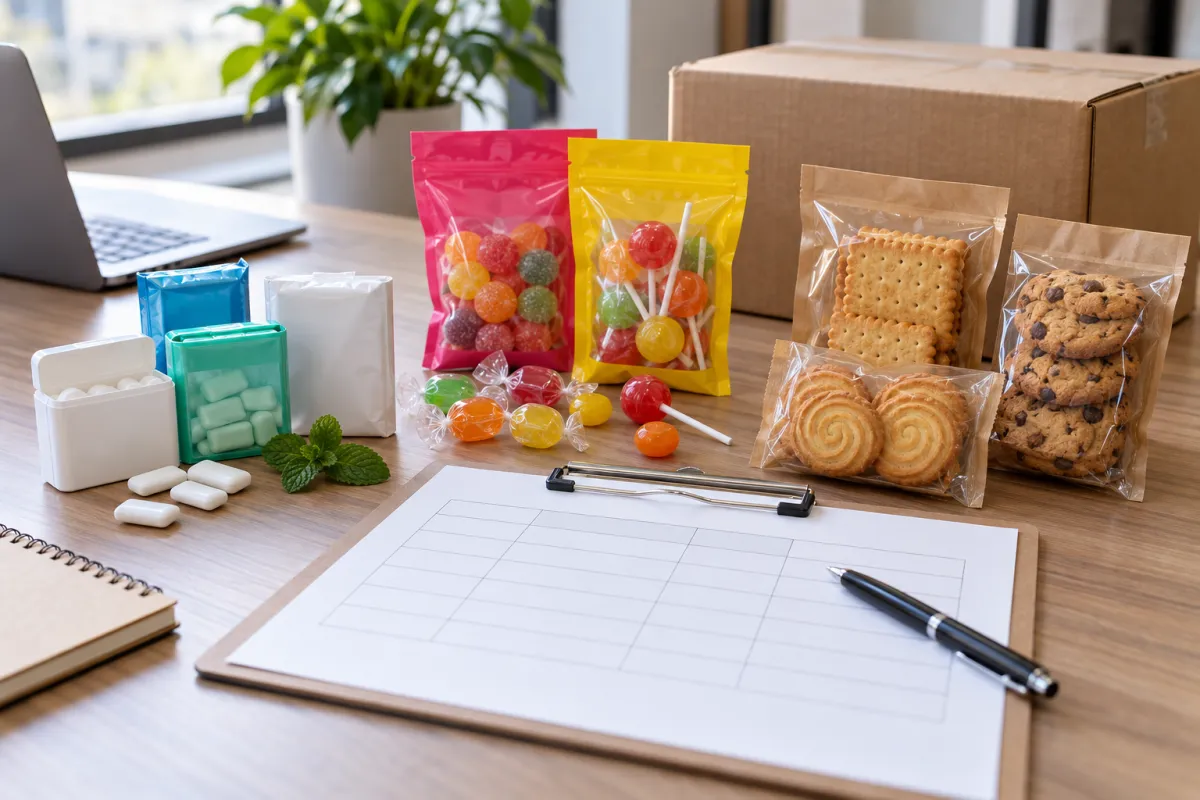
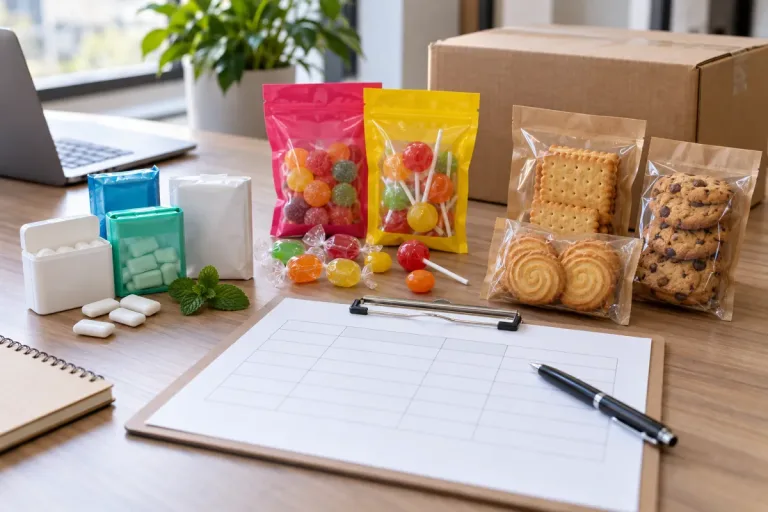
Compare the evidence required for each format before treating a listing as quote-ready.
Start with three different format questions
The format determines what the buyer should ask to see, but it does not answer the question on its own. Use the live Confectionery catalogue to collect candidate URLs, then record the exact variant shown on each page. Do not copy one item’s pack or handling description onto another item merely because both appear under confectionery.
| Candidate format | What to request for the exact SKU | Reason to hold the row |
|---|---|---|
| Gum or mints | Current retail-unit and case evidence, ingredient/label artwork, lot/date information and the intended retail presentation. | The displayed variant cannot be matched to current source evidence, or the destination label review remains open. |
| Candy or lollipop | Current piece or pack presentation, unit/case evidence, label artwork, ingredient information and lot/date information. | The named form or count conflicts with the source image or sheet; do not choose a figure from competing versions. |
| Biscuits or cookies | Current ingredient and allergen panel, retail and case evidence, date details and carton/handling information relevant to the proposed shipment. | Ingredient, variant or protection details are missing for the product that would actually be quoted. |
These are evidence requests, not a statement that every product has the same pack, ingredients, storage needs or import rules. The importer should identify which checks apply to the destination country and sales channel.
Apply a simple shortlist / request / hold rule
Shortlist a candidate for a commercial review when its exact URL, name and variant are clear and a current source record can be requested. Request details when the catalogue identifies the item but a pack, label, case or date field needed for the enquiry is not yet evidenced. Hold the row if the product name conflicts with its body copy or pack source, or if destination-specific review identifies an unresolved issue. “Hold” is a data-control status, not a claim that a product is defective or unavailable.
For example, if a gum page names one flavour but its description appears to describe another, do not decide which wording is correct from the URL alone. Attach the page link, flag the mismatch and ask for the current label or supplier sheet. The same rule applies when a candy page and a source sheet show different unit counts. A buyer should not turn an apparent catalogue conflict into a new public specification.
Keep the three product paths distinct
For gum and mint candidates, browse the Chewing Gum category or the broader Gum & Snack category. For lollipops and sweets, use Lollipop & Candy. For baked products, start with Biscuits & Cookies; coated cake-style products have a separate Chocolate Pie category. These pages help a buyer find candidate product links. They do not verify any SKU’s current specification, brand relationship or destination-market readiness.
A brand name can be useful for locating a catalogue item, but a brand-only enquiry is not an approved product list. Record the exact URL and variant; ask for current source evidence before using any pack, origin, ingredient, shelf-life or commercial detail in an import decision. This article deliberately does not use a named brand as proof of availability or authorization.
Make the first enquiry actionable without inventing details
Send one row per candidate with: product URL, displayed name/variant, destination country, intended sales channel, preferred retail presentation, estimated cases and the evidence still needed. Mark a field not yet confirmed instead of copying an old catalogue value. Ask for the current quote, case configuration, availability, timing and applicable shipment documents for the selected products and proposed lot. Document support may depend on the product, factory, destination, issuing body and shipment; it is not a standard promise for every item.
OneDay FMCG’s standard MOQ is one mixed container. There is no separate fixed minimum per SKU, carton or pallet, provided the confirmed assortment can complete the container. A proposed mix of gum, candy and cookies still needs a feasibility, sourcing and handling review; listing three formats does not make every combination acceptable. The Export Services overview explains the conditional service scope.
Use a one-page decision record
A compact decision record prevents “listed” from being mistaken for “approved.” For each candidate, keep three columns: source checked, missing evidence, and decision owner/next action. Put the country-specific label or import question with the importer, the current product record with the source review, and the proposed quantities and terms in the commercial enquiry. Reopen a held row only after the conflicting or missing evidence is resolved.
Next step: select the relevant product links from the category pages above, then send OneDay FMCG a SKU-level enquiry with the destination, estimated cases and open evidence questions. This makes it possible to review the proposed assortment without assuming stock, a fixed price, a particular document or brand authorization.
Sourcing FMCG from Vietnam?
Tell us what you are looking for and we will come back with a wholesale offer.
RELATED ARTICLES
View All 07 Oct, 2026
How to Source Vietnamese Coffee Wholesale: A Buyer Checklist
 25 Sep, 2026
FMCG Product Labels and English Sub-Labels for Export Orders
 23 Sep, 2026