
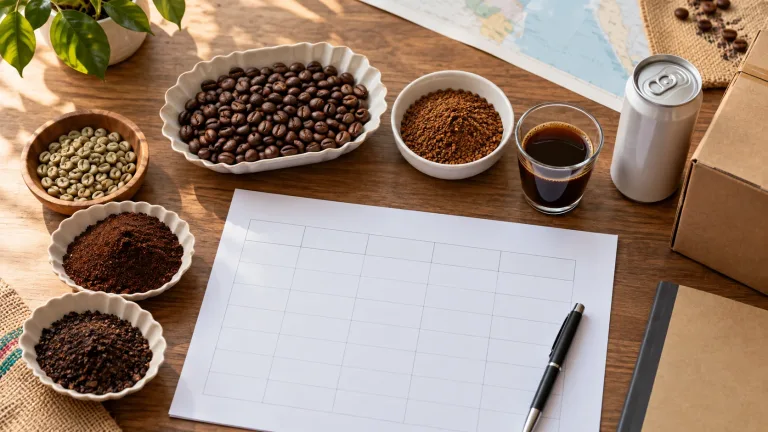
How to Source Vietnamese Coffee Wholesale: A Buyer Checklist
By OneDay FMCG Editorial Team · Updated 7 October 2026 · 5-minute read
A wholesale coffee enquiry becomes easier to evaluate when the product shortlist is precise. “Vietnamese coffee” can refer to instant mixes, roasted products or ready-to-drink formats, and each listing may have a different pack and destination-market requirement. This guide shows importers how to turn a broad request into a SKU-level brief. It does not establish current stock, a fixed specification, origin for every listed product or a guaranteed shipment document.
Key takeaways: define the format first; list exact product URLs and variants; verify current pack, label and lot evidence; state destination and estimated cases; request shipment-specific terms.
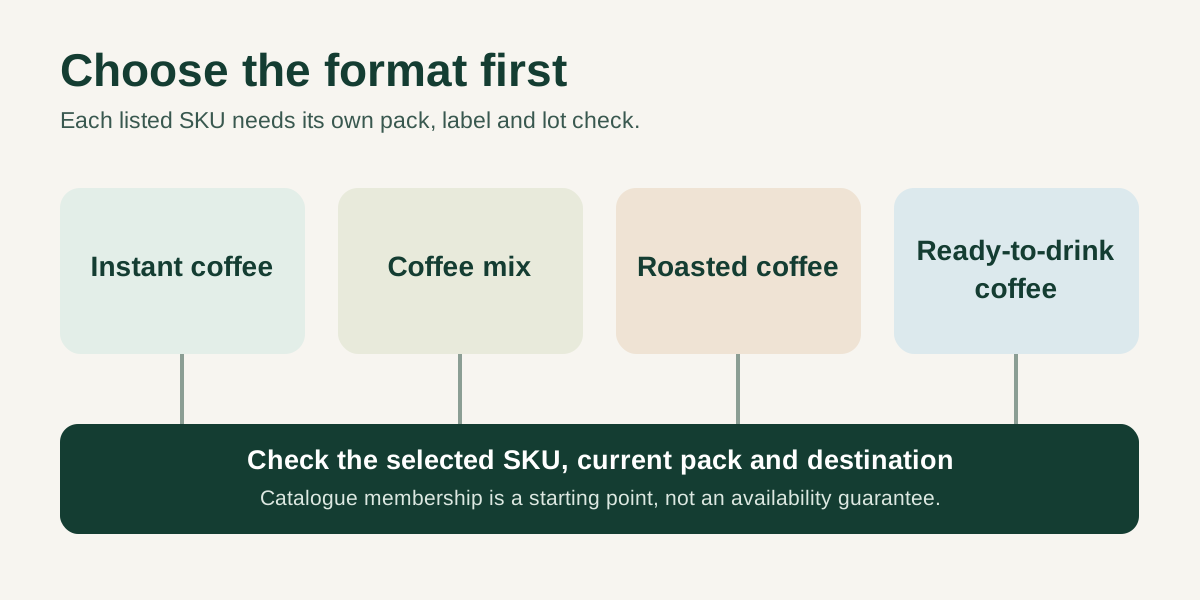
1. Choose the coffee format before choosing a brand
Start by defining what the customer will buy and how it will be sold: instant coffee, a coffee mix, roasted coffee or a ready-to-drink product. These are not interchangeable for ingredient review, handling, retail labeling or carton planning. The current Coffee & Tea catalogue helps you identify candidate product pages; tea items in the same category should be kept separate from the coffee shortlist.
For each candidate, record its exact product link and displayed name. A catalogue card is a discovery aid, not confirmation that the listed variant, artwork, pack or quantity is available for a particular order. Ask for current product evidence before approving a commercial description.
2. Build a shortlist that can actually be quoted
Send one row per requested SKU instead of a brand-only request. Include the format, variant, preferred retail size, estimated cases, destination country and any acceptable substitutions. If you have a target store format or language requirement, say so at this stage. A clear shortlist lets the proposed products be checked without assuming every coffee line has the same carton configuration or label.
- Identity: product URL, displayed name and variant.
- Pack: preferred retail unit and carton information to verify against the current product record or pack evidence.
- Quantity: estimated cases per SKU and the intended overall assortment.
- Market: destination, importer and any label, ingredient or handling checks already identified.
- Alternatives: variants or formats the buyer would accept if the first choice cannot be confirmed.
3. Verify the proposed pack and lot, not a generic category promise
Before accepting a quotation, request the current label or specification for each shortlisted item. Check the ingredient and allergen statement, retail artwork, units per carton, storage instructions, lot/date code and remaining shelf life relevant to the proposed shipment. These details can differ across formats and variants; neither a category page nor a previous order is sufficient evidence for a new lot.
Ask the responsible importer to identify destination-market rules for labeling and import documentation. OneDay FMCG can review labeling or repacking for selected products and projects, subject to feasibility and written scope before order acceptance. Export documents such as a Certificate of Origin or product-specific records may be supported on request, depending on the product, factory, destination, issuing body and shipment. The Product Quality & Shelf Life Policy explains why date and traceability details must remain accurate.
4. Define the shipment structure in the enquiry
OneDay FMCG's standard MOQ is one mixed container. There is no separate fixed minimum per SKU, carton or pallet, provided the confirmed assortment can complete a container. That does not mean every product combination or quantity is feasible: case increments, pack compatibility, weight, handling and the final loading plan still have to be reviewed. The wider Beverage catalogue can help form a candidate assortment, while the FMCG Export Services page sets out the service process.
If you wish to discuss EXW, FCA, FOB, CFR or CIF, identify the preferred Incoterm separately from the payment method. L/C and T/T are payment methods, not shipping terms. The final terms belong in the applicable quotation or sales documents.
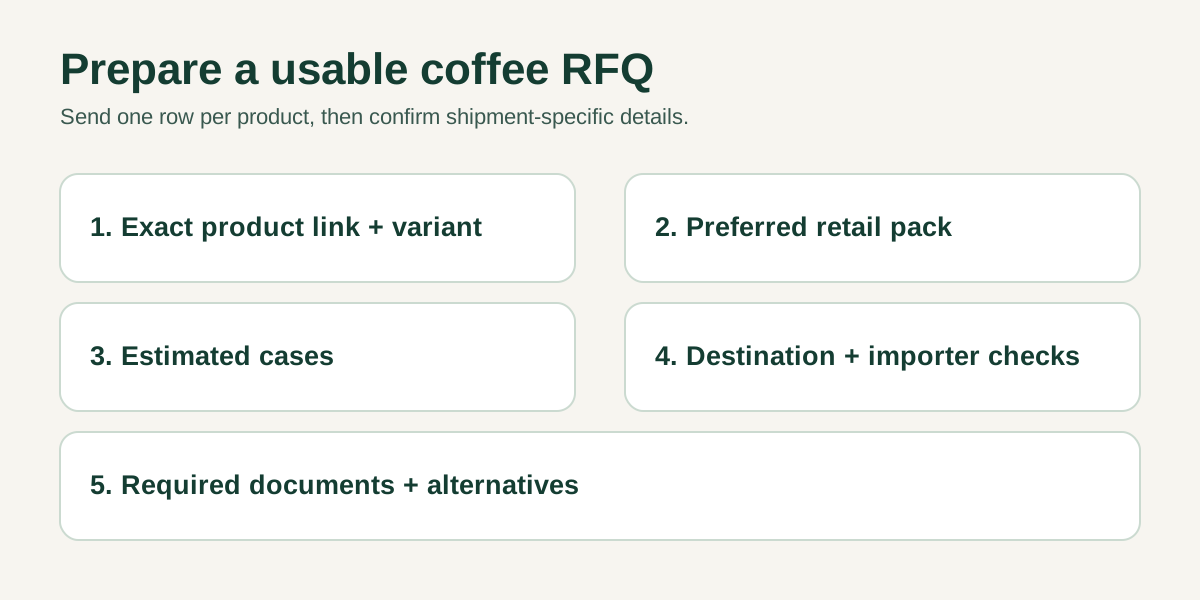
5. Send a complete request for quotation
Combine the shortlist, estimated cases, destination, preferred Incoterm, importer requirements, requested product or shipment documents and any timing constraints in one message. Make clear which details are mandatory and which substitutions are acceptable. Ask for the current pack and lot evidence, shipment feasibility and quotation terms for the selected items; do not assume a price, stock level or delivery date from a public product page.
Next step: browse the Coffee & Tea products, then send OneDay FMCG your SKU-level enquiry. A product-specific review can follow before commercial terms are confirmed.
Frequently asked questions
Is every coffee product on the catalogue currently available?
No. A public listing is a starting point for a shortlist. Confirm the current variant, pack, quantity and lot evidence for the proposed order.
Can I combine coffee with other FMCG products?
The standard MOQ is one mixed container, with no separate fixed SKU, carton or pallet minimum when the confirmed assortment can complete a container. The specific mix still requires a feasibility and loading review.
What documents should I ask about?
Share the destination and importer requirements, then ask which product and shipment documents can be supported for the selected items. Availability depends on the product, factory, destination, issuing body and shipment.
What should my first enquiry include?
Provide exact product links and variants, desired retail and carton packs, estimated cases, destination, preferred shipment terms and any required label or document checks. Include acceptable substitutions and your target delivery window.
Sourcing FMCG from Vietnam?
Tell us what you are looking for and we will come back with a wholesale offer.
RELATED ARTICLES
View All 14 Oct, 2026
Gum, Candy and Cookies: A Three-Format SKU Triage Checklist
 25 Sep, 2026
FMCG Product Labels and English Sub-Labels for Export Orders
 23 Sep, 2026