
Vietnam FMCG Product Categories for Importers and Distributors
By OneDayFMCG Editorial Team
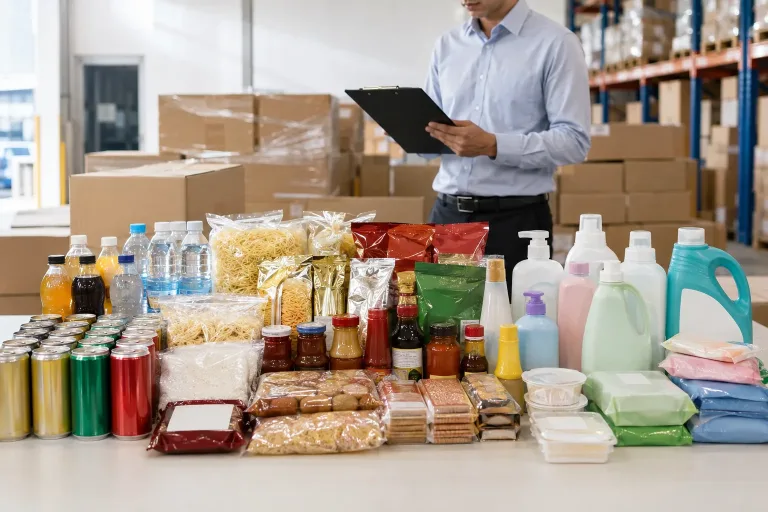
Vietnam FMCG products cover a broad range of everyday goods, from beverages and packaged foods to confectionery and household essentials. For an importer, however, a long catalogue is not the same as a workable assortment. The right category mix must fit local demand, retail price points, packaging preferences, shelf-life expectations, labeling rules, and the economics of the shipment.
This guide helps importers and distributors build a practical category shortlist. It explains what to review before asking for a quotation, how to compare products across categories, and when a mixed or multi-brand order may make commercial sense. Product availability, specifications, documentation, and order conditions should always be confirmed for the exact SKU and destination market.
Key takeaways
- Start with consumer use cases and sales channels, not only brand recognition.
- Compare pack format, case configuration, remaining shelf life, labels, and documents at SKU level.
- Separate high-frequency core lines from test products and seasonal items.
- A mixed order can broaden the assortment, but it also requires tighter planning and data control.
- Share destination-market requirements early so the supplier can assess product and document fit before quotation.
What counts as a Vietnam FMCG product?
Fast-moving consumer goods are products purchased and replenished frequently. In export sourcing, the category can include packaged drinks, ambient food, confectionery, personal care, and household goods. Each group behaves differently in storage, transport, merchandising, and regulatory review.
Vietnam’s food and beverage sector has attracted international sourcing interest, including through trade-promotion programs that connect local suppliers with overseas retail and distribution systems. This does not mean every Vietnamese SKU is automatically suitable for every market. Buyers still need to qualify the product, pack, label, shipment documents, and commercial terms for their own destination.
For an initial review, browse the broader FMCG product catalogue and then narrow the list by category and use case.
1. Beverages
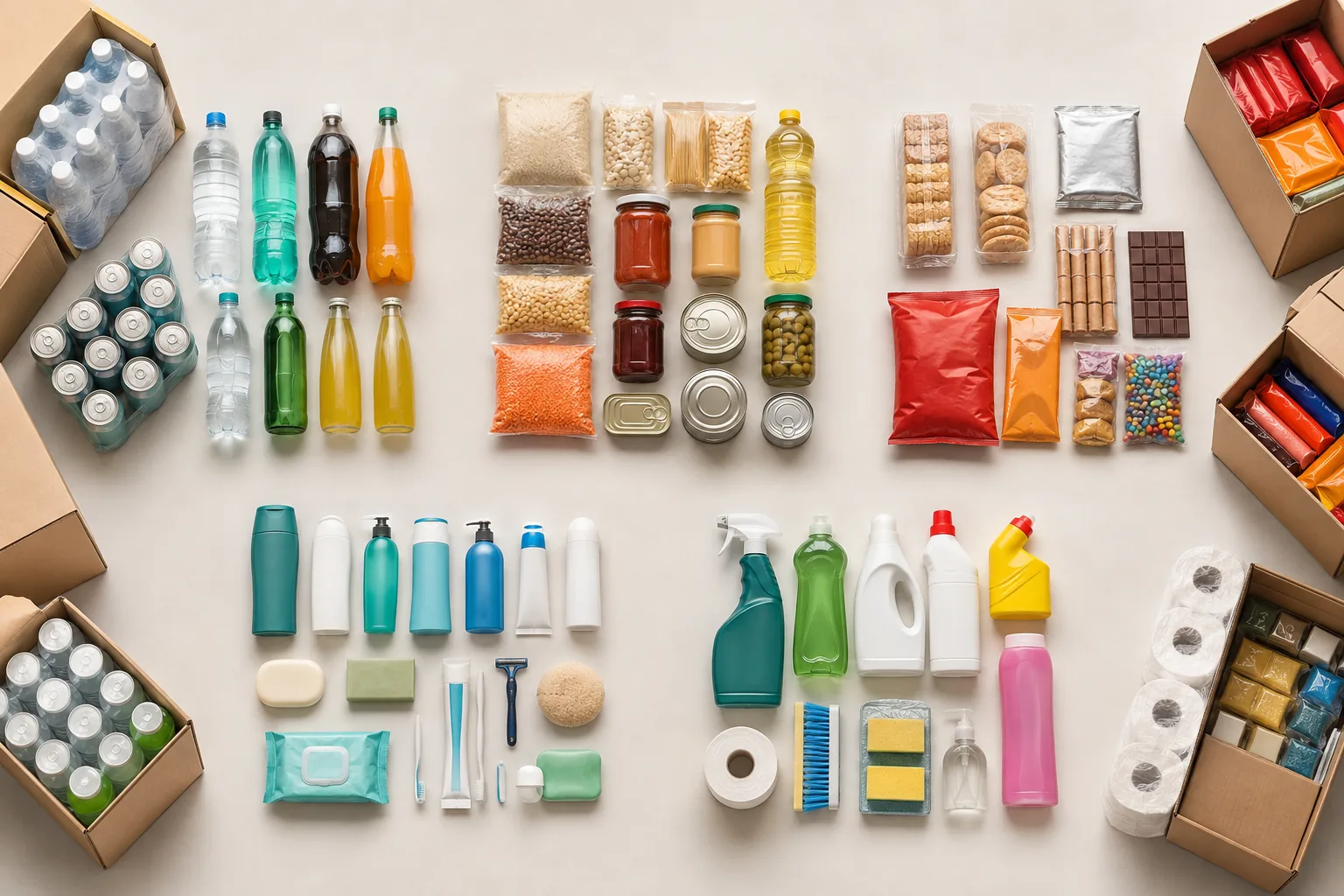
Vietnam beverage sourcing can include ready-to-drink coffee, tea, juice drinks, soft drinks, energy drinks, plant-based beverages, and bottled water. The practical buying questions are usually more specific than the flavor list:
- Is the product packed in a can, PET bottle, glass bottle, carton, or sachet?
- What are the unit size, units per case, case dimensions, and gross weight?
- Is the product ambient or temperature-sensitive?
- What production-date and remaining-shelf-life conditions can be confirmed for the proposed lot?
- Does the label contain the information needed for the destination, or will an approved supplementary label be required?
Beverages can add substantial weight and volume to a shipment, so buyers should compare landed-cost logic as well as unit price. Review the current beverage range and request case-level data before fixing the assortment.
2. Packaged foods and pantry products
Packaged food can cover noodles, sauces, seasonings, canned products, snacks, cooking ingredients, and other shelf-stable pantry items. These products often work across several channels: supermarkets, independent retailers, restaurants, Asian grocery stores, and wholesale distribution.
When building a food shortlist, organize products by consumer occasion rather than placing every SKU in one long list. Useful groups include quick meals, cooking essentials, sauces and condiments, breakfast items, and on-the-go snacks.
Check the ingredient statement, allergen information, pack language, case count, storage instructions, and date coding for each SKU. Requirements may differ by product type and importing country. The food category is a starting point for assortment discovery, not a substitute for destination-specific review.
3. Confectionery and impulse products
Confectionery can help distributors build variety through biscuits, wafers, candy, chocolate products, gummies, and small snack packs. These lines are often selected for convenience stores, checkout displays, gift assortments, and price-sensitive retail channels.
The main sourcing risks are easy to miss when the unit is small. Buyers should check heat sensitivity, breakage risk, case configuration, display-ready packaging, allergen declarations, date coding, and the condition expected after the planned transport route.
Do not assume that all confectionery products can share the same handling plan. A hard candy and a chocolate-coated product may need different risk controls. Compare candidate lines in the confectionery catalogue before asking for samples or a commercial offer.
4. Personal care and household essentials
An FMCG assortment may also include shampoo, soap, toothpaste, skincare basics, detergent, cleaning products, tissues, or other household consumables. These products can expand a distributor’s basket beyond food and beverage, but they introduce different packaging, labeling, and transport questions.
For liquids and household products, review leakage protection, inner packing, carton strength, unit seals, hazard or handling classification where relevant, and compatibility with other goods in the shipment. For personal care items, verify claims, ingredient information, responsible-party details, and any registration or notification requirements in the destination market.
The correct approach is SKU-by-SKU verification. A familiar consumer category does not automatically mean the item is ready for import in every jurisdiction.
How importers should compare FMCG categories
A category comparison should combine demand, operations, and compliance. The table below is a practical first-pass framework.
| Decision factor | What to review | Why it matters |
|---|---|---|
| Target channel | Supermarket, wholesaler, convenience, foodservice, e-commerce | Changes pack size, price architecture, and assortment depth |
| Consumer use case | Daily staple, impulse, meal solution, gift, household need | Helps prioritize core lines over catalogue breadth |
| Packaging | Material, unit size, case count, dimensions, weight | Affects merchandising, handling, and container utilization |
| Shelf-life fit | Total shelf life, production date, remaining shelf life at dispatch | Influences sell-through time and inventory risk |
| Label readiness | Language, mandatory fields, supplementary-label plan | Reduces avoidable rework before import or sale |
| Documentation | Commercial documents plus product- or market-specific certificates | Supports clearance and buyer compliance checks |
| Order economics | MOQ basis, case quantity, consolidation cost, payment and trade terms | Determines whether the assortment is commercially workable |
| Supply continuity | Lot confirmation, production cycle, substitution process | Matters for repeat orders and retail continuity |
This comparison should be recorded at SKU level. A category-level statement such as “long shelf life” or “export packaging” is too broad for an order decision.
Build a shortlist before requesting prices
Price requests are more useful when the buyer supplies a structured brief. A practical shortlist should include:
- Destination country and intended sales channel.
- Preferred categories, brands, or exact SKUs.
- Target pack sizes and acceptable alternatives.
- Estimated quantity by SKU or category.
- Label language and any known importer requirements.
- Required documents or certificates, subject to verification.
- Target shipment window and preferred trade term.
If the exact SKU is not yet known, start with the use case and price segment. The supplier can then propose candidates for further review. Any recommendation remains subject to availability, specification confirmation, and destination-market acceptance.
When a mixed-category order may make sense
A mixed-category or multi-brand order can help a distributor test demand, serve several retail segments, or avoid over-concentrating inventory in a single line. It can also make the quotation and loading process more complex.
Before choosing consolidation, confirm how MOQ is measured, whether products can be combined in one shipment, whether cartons have compatible handling needs, and how documents will identify multiple brands and SKUs. Case dimensions, weights, production readiness, and labeling work must be coordinated early.
OneDayFMCG’s FMCG export services page explains the broader sourcing and shipment-support workflow. Final feasibility depends on the selected products and order conditions.
Packaging, shelf life, labels, and documents: verify at SKU level
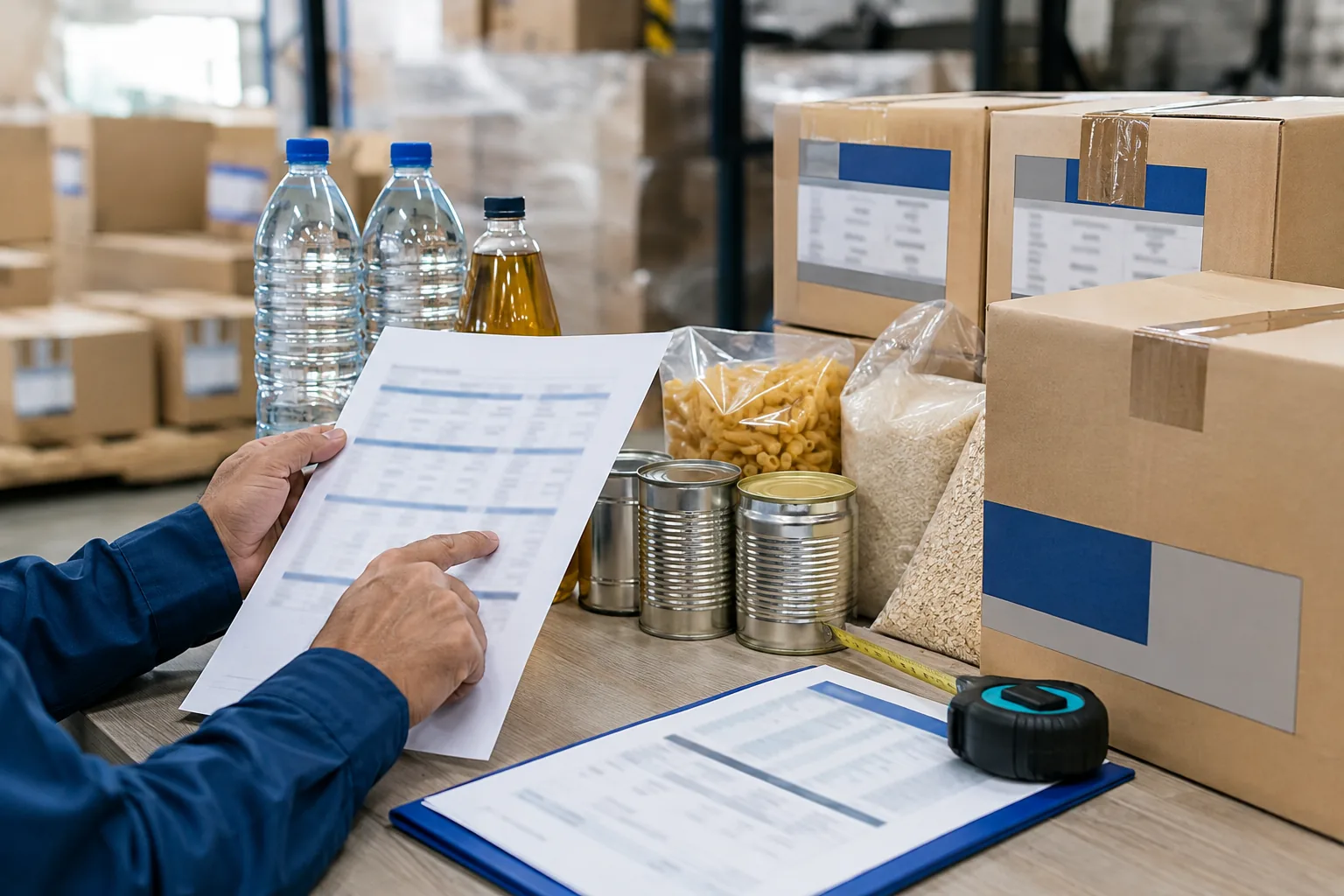
Four checks should happen before a buyer treats a product as order-ready:
Packaging
Ask for unit and carton specifications, packaging material, case count, dimensions, gross weight, and handling notes. Photos can support review, but the confirmed commercial specification should control the order.
Shelf life and production date
Request the stated shelf life and the expected remaining shelf life for the proposed shipment. Do not rely on a category-wide assumption. Production date, best-before or expiry presentation, and buyer acceptance thresholds must be aligned before order confirmation.
Labels
Compare the original label with destination requirements. If translation or a supplementary label is needed, agree on responsibility, approved wording, placement, timing, and final proof review. The importer should confirm local requirements with the relevant authority or qualified adviser.
Documents
Commercial invoice, packing list, and transport documents are common elements of international shipments, while origin, health, inspection, analysis, or other certificates may depend on the product and destination. Confirm the required set before production or dispatch. Document names alone are not enough; product descriptions, quantities, marks, dates, and consignee details must be consistent.
A practical category-selection workflow
Use the following sequence to reduce rework:
- Define the destination, customer type, and retail channel.
- Select two or three priority categories.
- Build a small core list plus test lines.
- Collect SKU data for pack, carton, shelf life, label, and documentation.
- Remove products that do not fit operational or regulatory needs.
- Compare order structure and shipment options.
- Request a written quotation based on the final shortlist.
- Approve samples, artwork, documents, and commercial terms before shipment.
This workflow keeps product discovery separate from final compliance approval. It also gives the supplier a clearer basis for checking availability and preparing a useful commercial response.
Frequently asked questions
What Vietnam FMCG product categories can importers source?
Common categories include beverages, packaged foods, confectionery, personal care, and household essentials. The available range and export suitability must be confirmed by SKU, brand, destination, and shipment.
Can different FMCG categories be combined in one order?
They may be, when MOQ rules, packaging, handling, documentation, production timing, and shipment planning are compatible. Feasibility should be assessed against the actual product list.
What information should a buyer send for a quotation?
Send the destination country, requested categories or SKUs, pack preferences, estimated quantities, sales channel, label needs, required documents, target timing, and preferred trade term.
How should importers check shelf life?
Check the stated shelf life, production or date-code format, expected remaining shelf life at dispatch, storage requirements, and the minimum remaining shelf life acceptable for the sales channel. Confirm these points for each proposed lot.
Are Vietnamese product labels automatically accepted overseas?
No universal assumption is safe. Label rules vary by country and product. The importer should confirm mandatory content, language, claims, nutrition or ingredient presentation, importer details, and supplementary-label rules for the destination.
Source notes
- Ministry of Industry and Trade: Vietnam’s food and beverage sector and international buyers
- Vietnam Customs: export-document reference
- ICC: Incoterms® 2020 overview
Build your Vietnam FMCG shortlist
To receive a more relevant product proposal, send OneDayFMCG your destination country, preferred categories or SKUs, estimated quantities, target pack sizes, label requirements, required documents, and shipment timing. The team can review the request against available sourcing and export-support options.
Continue the category review: Buyers can also compare the Agriculture, Home Care and Personal & Beauty Care category pages when building a balanced shortlist. Product, pack and export details remain subject to confirmation for each SKU.
Sourcing FMCG from Vietnam?
Tell us what you are looking for and we will come back with a wholesale offer.
RELATED ARTICLES
View All 14 Oct, 2026
Gum, Candy and Cookies: A Three-Format SKU Triage Checklist
 07 Oct, 2026
How to Source Vietnamese Coffee Wholesale: A Buyer Checklist
 25 Sep, 2026