

How to Import FMCG Products from Vietnam: A 6-Step Guide
By OneDay FMCG Editorial Team | Updated August 31, 2026 | 9-minute read
Learning how to import FMCG from Vietnam is easier when the first order is treated as a controlled sourcing project rather than a simple product purchase. Product fit, packaging, shelf life, documents, consolidation and delivery all need to be aligned before the shipment is confirmed.
This six-step guide is designed for international buyers, importers and distributors sourcing packaged food, beverages, confectionery, personal care or home-care products from Vietnam. It explains what to prepare, what to confirm with a supplier and where import-side verification remains the buyer's responsibility.
Quick checklist before you contact a Vietnam FMCG supplier
- Destination market and sales channel
- Product categories or initial SKU list
- Estimated quantity and delivery window
- Packaging, language label and shelf-life requirements
- Preferred shipping destination and commercial terms
- Documents or product registrations required by the destination market
1. Define the product brief and target market requirements
Start with a short product brief that a sourcing team can act on. State the destination country, sales channel, product categories, preferred pack sizes, target price range, estimated quantity and required delivery window. Add any known requirements for language labels, ingredients, certificates, shelf life, retailer onboarding or product registration.
A clear brief allows a supplier to recommend a focused assortment instead of sending a broad catalogue with limited relevance. For a multi-brand order, explain whether the products will be sold through retail, wholesale, foodservice, convenience stores or e-commerce. The channel can affect pack format, carton quantity and labelling expectations.

A practical product brief helps a Vietnam FMCG supplier shortlist relevant categories, formats and order options.
2. Build a product shortlist that fits the market
Once the brief is clear, create a shortlist by category and product. Buyers should compare more than unit price. Review pack size, case pack, country-of-origin information, storage requirements, remaining shelf life at shipment and the ability to replenish the product later.
A useful approach is to divide the shortlist into three groups:
- Core products: products that match established everyday demand.
- Test products: a controlled selection used to validate demand.
- Seasonal or promotional products: products tied to a defined selling window.
Browse the OneDay FMCG product catalogue to identify relevant categories. Current availability, specifications and export suitability should still be confirmed before a purchasing decision is made.
3. Confirm quotation, quantity and commercial terms
Ask for a quotation that makes each product line easy to compare. It should identify the product, pack size, carton quantity, quantity quoted and applicable commercial terms. Before confirming an order, align on minimum quantity, packaging specification, price validity, estimated preparation time, payment process and shipping arrangement.
Do not assume every product can be supplied under identical conditions. Products from different manufacturers may have different production schedules, carton configurations, shelf-life expectations or documentation requirements. If the order combines several brands or categories, confirm how the shipment will be consolidated and how each carton will be identified.
For support across product selection and consolidation, review our FMCG export and sourcing services.
4. Check export documents and import requirements early
Import rules vary by destination market, product category and sales channel. The exporter can prepare export-side documents and product information, but the importer remains responsible for confirming the requirements that apply in the destination country.
Depending on the products and market, the shipment may require commercial documents, packing information, certificates of origin, product specifications, health or quality documentation and compliant label information. Check these requirements before products are ordered or packed. Late changes can affect cost, timing and the suitability of the selected products.

Document and label requirements should be reviewed before the product list and shipment are finalized.
See our overview of export compliance and documentation. For customs, legal or product-registration advice, consult the relevant authority or a qualified adviser in the destination market.
5. Plan consolidation, shipping and pre-shipment checks
FMCG orders often combine products with different brands, cartons and storage conditions. The shipping plan should identify which goods can be consolidated, the preferred loading date, destination port or delivery location, and the party responsible for freight arrangements.
Before shipment, review the final product list, carton counts, packaging condition, production and expiry information, and the agreed document set. For a mixed order, a structured pre-shipment review reduces receiving discrepancies and makes repeat ordering easier.
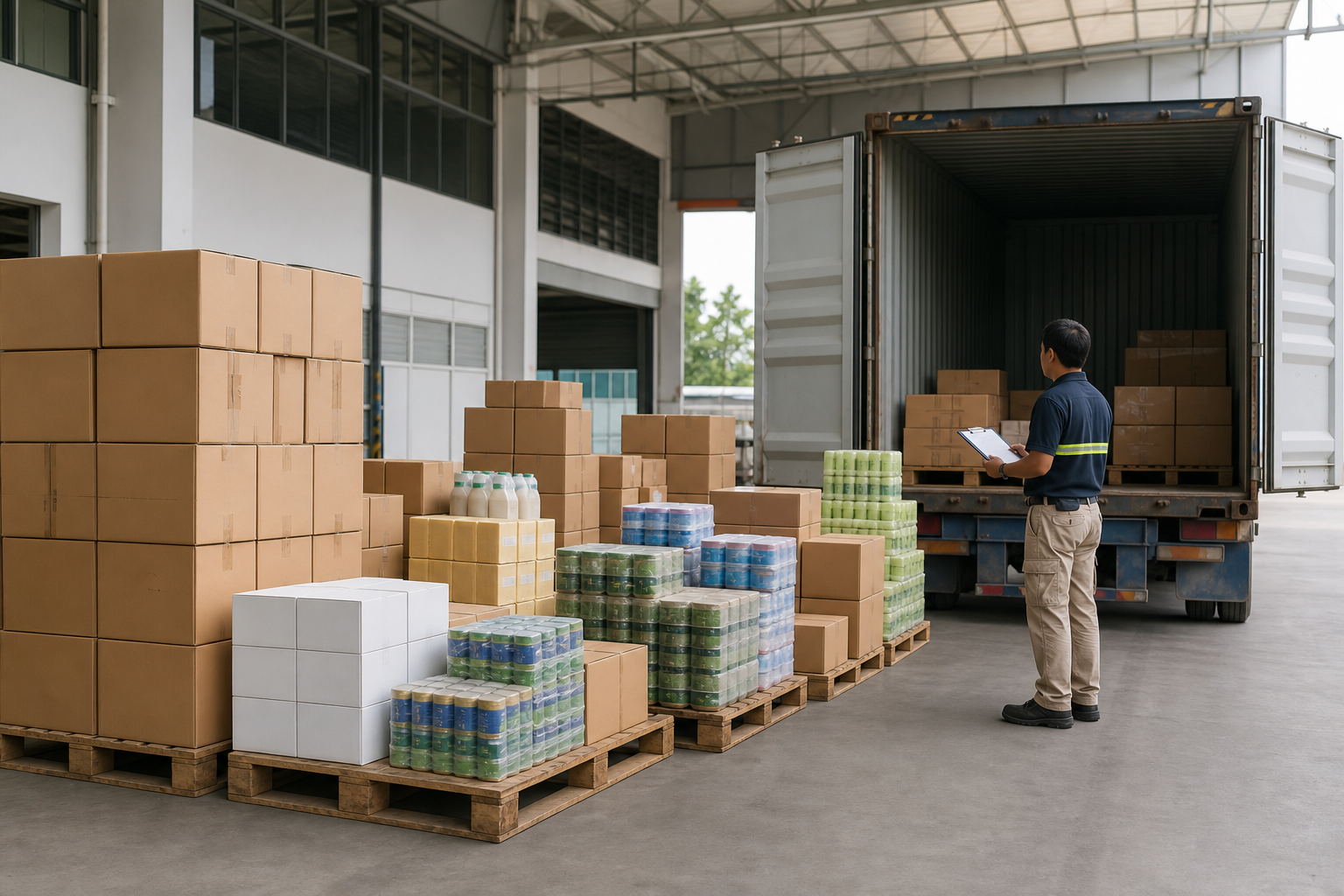
Category-based pallet and carton planning improves control when several FMCG products are consolidated.
6. Use the first order to improve repeat ordering
The first shipment creates the data needed to improve the next one. Record which products moved well, which pack sizes suited the market, whether the documents were accepted without delay and whether the delivery timeline matched expectations.
Share structured feedback with the supplier. This can improve the second-order brief, reduce unnecessary changes and help the sourcing team recommend a more focused assortment. It also supports better planning for replenishment, seasonal demand and future mixed-container orders.
Common mistakes when importing FMCG products from Vietnam
- Requesting prices without stating the destination market or quantity.
- Selecting products before checking labels, shelf life and import requirements.
- Comparing unit prices without comparing pack and carton configuration.
- Assuming every category follows the same documentation process.
- Leaving consolidation and pre-shipment checks until the loading date.
Frequently asked questions
What should an importer include in the first enquiry?
Include the destination market, product categories or SKU list, estimated quantity, delivery window, preferred shipping destination and any known label or document requirements.
Can buyers combine several FMCG brands in one shipment?
It may be possible when quantities, product handling requirements and delivery schedules can be consolidated. The arrangement should be confirmed for the specific product list before the order is approved.
Which documents are needed to import FMCG products from Vietnam?
The required documents depend on the product and destination market. Buyers should discuss export documents with the supplier and confirm import-side requirements with the relevant local authority or adviser.
How can a buyer evaluate a Vietnam FMCG supplier?
Review the supplier's business information, product scope, communication process, quotation detail, document readiness and ability to explain how the order will be consolidated and checked.
Request an FMCG sourcing quotation
If you are planning to import FMCG products from Vietnam, send your target market, product categories or SKU list, estimated quantity and preferred delivery window. The OneDay FMCG team can help structure the enquiry and identify the information required for a workable quotation.
Sourcing FMCG from Vietnam?
Tell us what you are looking for and we will come back with a wholesale offer.
RELATED ARTICLES
View All 21 Oct, 2026
Instant Noodle Importer Pack, Date and Label Checklist
 14 Oct, 2026
Gum, Candy and Cookies: A Three-Format SKU Triage Checklist
 07 Oct, 2026