
Why International Buyers Source FMCG from Vietnam: A Buyer Evaluation Framework
Vietnam FMCG supplier searches often return broad claims about low prices, product variety and export capability. Those points may explain why Vietnam attracts international buyers, but they do not tell an importer whether a specific supplier fits a market, channel or shipment plan. A stronger buying process starts with evidence: category fit, export documentation, quality controls, commercial terms and the supplier’s ability to communicate clearly.
This framework helps importers, distributors and retail buyers compare Vietnam FMCG sourcing options before requesting a quotation. It separates country-level context from supplier-level proof and gives buyers a scorecard they can reuse across shortlisted companies.
For the end-to-end import workflow, see the six-step FMCG import guide before you build a supplier shortlist.
Key takeaways for buyers
- Treat Vietnam’s trade connectivity and manufacturing base as market context, not a guarantee about an individual supplier.
- Shortlist suppliers by category fit, pack format, target market and channel before comparing price.
- Ask for a product list, specification sheet, export documents and label information for the exact SKUs under consideration.
- Confirm MOQ, mixed-brand consolidation and shipment planning in writing for each proposed order.
- Use a scorecard so quality, documentation and communication carry appropriate weight alongside commercial terms.
1. Start with product breadth and category fit
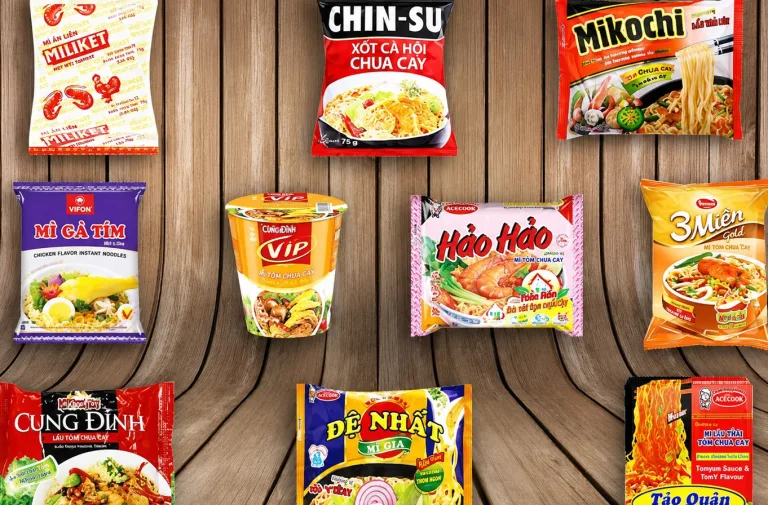
Product breadth is useful only when it matches your sales channel. A distributor looking for shelf-stable snacks needs a different shortlist from a retailer seeking beverages, personal care or home care products. Begin with the market and channel, then map the category requirements.
Use the FMCG product catalogue to build an initial category list. For each category, record the target SKU, pack size, case configuration, language requirements, expected shelf-life threshold and any market-specific document questions.
| Buyer question | Evidence to request |
|---|---|
| Does the supplier cover the right categories? | Current category/SKU list and brand or manufacturer details |
| Is the pack suitable for the channel? | Unit size, case pack, pallet/carton dimensions and product images |
| Can the product be sold in the destination market? | Label review, ingredient/allergen information and applicable documents |
| Can the range be replenished? | Current availability status and a process for confirming each order |
Do not treat a long catalogue as proof of stock, exclusivity or future availability. Those points need to be confirmed for the specific quotation.
2. Read export orientation as context, not a supplier promise
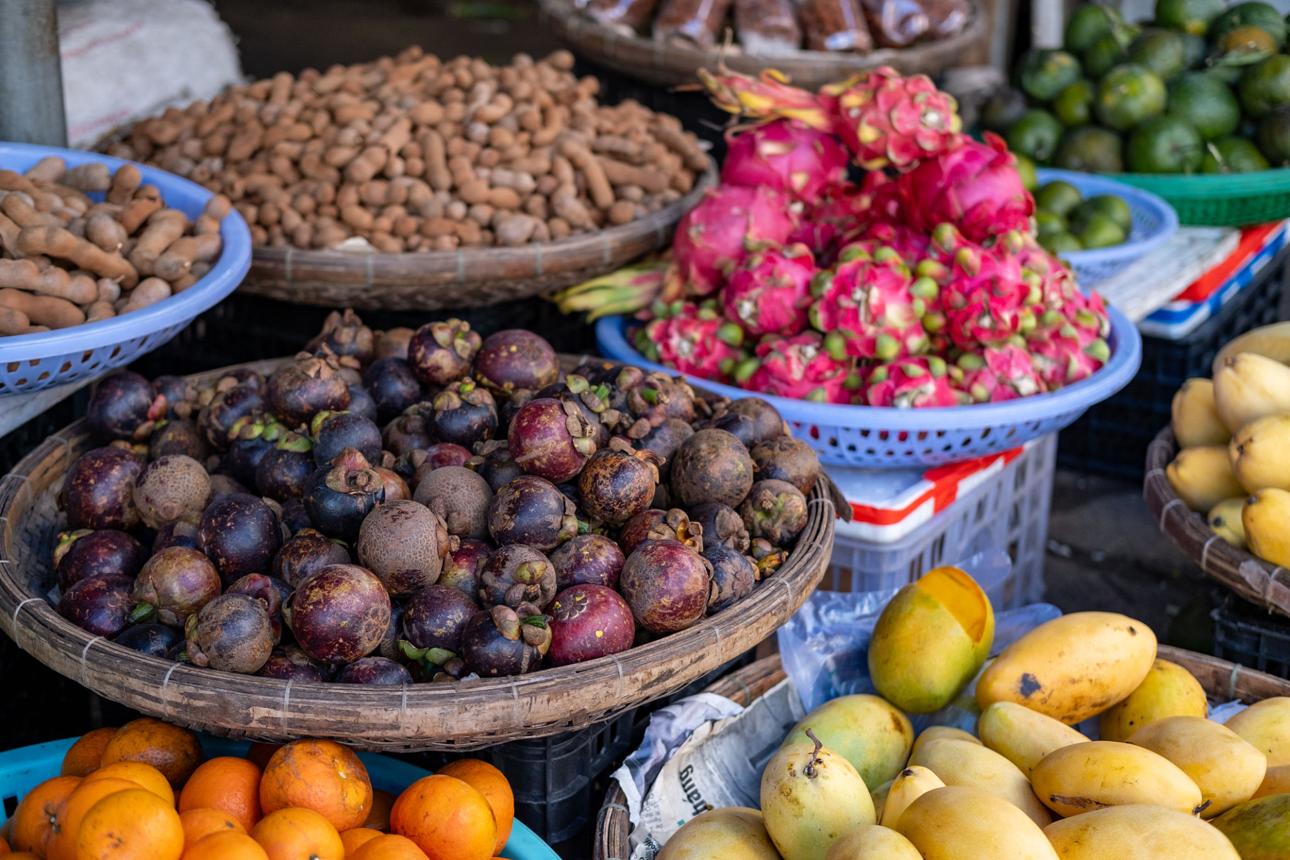
Vietnam is a trade-oriented economy with a large manufacturing and export base. The World Bank’s country overview describes a trade-to-GDP ratio of nearly 170% and notes the importance of manufacturing exports to recent growth. The Ministry of Industry and Trade has also highlighted export recovery, free-trade-agreement opportunities and rising requirements around traceability, consumer safety and sustainable supply chains.
For a buyer, this context suggests that export readiness should be part of supplier due diligence. It does not prove that every company can serve every destination. Ask the supplier to explain which markets it has served, which Incoterms it can quote, and which party handles export and import documentation.
The U.S. International Trade Administration’s Vietnam market guidance is a useful reminder to separate country opportunity from company capability. Use it to frame market questions, then verify the answers against the supplier and the exact product.
3. Verify the supplier before comparing price
A reliable Vietnam FMCG supplier should be able to provide clear, consistent information for the proposed order. A buyer does not need every document at the first conversation, but the supplier should explain what is available and when it will be supplied.
Ask for:
1. Legal company name and business contact details. 2. Product and brand ownership or distribution information where relevant. 3. Product specification sheets and current pack/label images. 4. A sample commercial invoice or quotation format with the commercial terms explained. 5. Export-document readiness for the destination market. 6. A named contact responsible for order coordination and document follow-up.
Check that the company name, email domain, website and quotation details are consistent. Be cautious when a supplier promises certification, guaranteed lead time, lowest pricing or unlimited availability without product-specific evidence.
4. Confirm MOQ, mixed-brand consolidation and shipment planning
MOQ is not a universal feature of a supplier; it can vary by brand, SKU, pack size, production source and shipment plan. Ask for MOQ at SKU and order level, and clarify whether mixed-brand or mixed-category consolidation is possible for the proposed container or shipment.
Before requesting a final quote, send a structured brief containing:
- Destination market and delivery location.
- Categories and exact SKUs, if known.
- Estimated quantity or target carton count.
- Required pack language and label format.
- Target delivery window.
- Preferred Incoterm and any documentation requirement.
The FMCG export services page can help frame the service questions, but the quotation must confirm what applies to the order. Do not assume that a catalogue listing automatically means a product can be combined, shipped or replenished under the same terms.
5. Check quality, shelf life and labels at SKU level
Quality review should follow the product, not only the supplier profile. For each shortlisted SKU, ask how the supplier confirms batch information, production date, expiry or best-before date, storage conditions and packaging integrity.
For food and beverage products, review ingredients, allergens, nutrition information and destination-market label requirements. For personal and home care, check the applicable product information and safety documentation. If an English sub-label or another market label is required, confirm who prepares it and who approves the final artwork.
Avoid publishing or relying on a generic claim such as “international quality” unless the exact product evidence supports it. Certification, Halal, FDA, ISO, shelf-life duration and regulatory acceptance should be treated as product- and market-specific questions.
6. Use a buyer scorecard before asking for the final offer
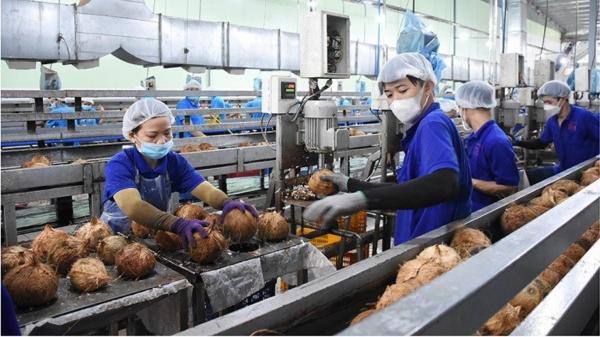
A scorecard makes supplier comparison less dependent on the first price received. Score each candidate from 1 (weak evidence) to 5 (clear, current evidence), and record the document or response supporting the score.
| Dimension | Weight | What a strong score means |
|---|---|---|
| Category and SKU fit | 25% | The range matches the target market, channel and pack format |
| Documentation readiness | 20% | The supplier can explain and provide the required product/export documents |
| Quality and label process | 20% | SKU-level checks, batch information and label review are clear |
| Commercial flexibility | 15% | MOQ and consolidation options are stated for the proposed order |
| Shipment coordination | 10% | Incoterm, delivery planning and responsibilities are explicit |
| Communication and follow-through | 10% | Questions are answered consistently with usable evidence |
Set a minimum evidence threshold before moving to a commercial negotiation. A low price should not compensate for missing documents, unclear product identity or an unworkable shipment plan.
7. Prepare a better quotation request
When you are ready to compare offers, send the same brief to each shortlisted supplier. Ask each one to return the same fields: SKU, brand/manufacturer, pack size, case pack, MOQ, available documentation, quotation validity, Incoterm, estimated shipment timing and any assumptions.
This format makes differences visible. It also gives the supplier a fair opportunity to explain what is confirmed, what depends on the manufacturer and what requires additional checking before order acceptance.
FAQ
How do I find a Vietnam FMCG supplier for my market?
Start with your categories, channel, destination and required documents. Build a shortlist, then verify the exact SKUs, labels, MOQ and shipment responsibilities with each supplier.
Is Vietnam always the lowest-cost FMCG sourcing origin?
No. Cost depends on product, brand, pack format, order quantity, freight, duties, exchange rates and destination requirements. Compare total landed-cost assumptions rather than a headline unit price.
Can I combine different FMCG brands in one order?
Sometimes, depending on SKU availability, supplier relationships, carton quantities and shipment planning. Ask for a written consolidation proposal for the exact products and quantities.
What should I send when requesting a Vietnam FMCG quotation?
Provide your market, categories or SKU list, estimated quantity and delivery window. Add pack-language, documentation, Incoterm and destination requirements when known.
Source notes
- World Bank — Viet Nam overview: country and trade context; do not use it as proof of an individual supplier’s capability.
- Vietnam Ministry of Industry and Trade — export outlook: export target and policy context, explicitly identified as 2025 data.
- U.S. International Trade Administration — Vietnam market opportunities: market-opportunity context; verify product and company claims separately.
CTA
Sourcing FMCG from Vietnam? Tell us your target market, categories or SKU list, estimated quantity and delivery window through Contact us. We can then confirm which product, documentation and shipment details need to be checked for your request.
Related category planning: Compare the FMCG category overview with the Agriculture category before narrowing a sourcing brief. Category fit and product-level evidence still need to be checked for the specific request.
Sourcing FMCG from Vietnam?
Tell us what you are looking for and we will come back with a wholesale offer.
RELATED ARTICLES
View All 21 Oct, 2026
Instant Noodle Importer Pack, Date and Label Checklist
 14 Oct, 2026
Gum, Candy and Cookies: A Three-Format SKU Triage Checklist
 07 Oct, 2026